
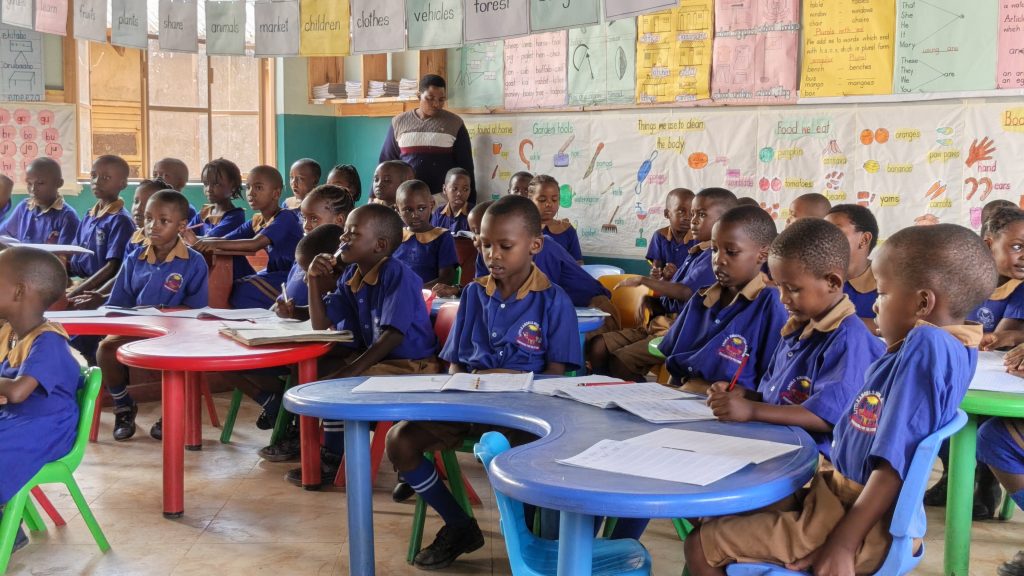
Handwriting is an important foundational skill that helps children develop fine motor skills, improve letter recognition, and build confidence in reading and writing.
Objectives
- Develop correct pencil grip and posture.
- Improve hand-eye coordination.
- Learn proper letter formation.
- Write neatly and legibly.
- Build confidence in written communication.
Activities for Teaching Handwriting
- Finger and Hand Exercises
- Clay modeling, threading beads, paper tearing, and coloring.
- Strengthens small muscles needed for writing.
- Tracing Activities
- Trace lines, shapes, patterns, letters, and numbers.
- Helps children learn correct stroke formation.
- Pattern Writing
- Practice straight lines, curves, zigzags, loops, and circles.
- Prepares learners for letter writing.
- Letter Formation Practice
- Demonstrate letters on the board.
- Guide children to write from top to bottom and left to right.
- Sand and Air Writing
- Write letters in sand trays or in the air using fingers.
- Makes learning enjoyable and interactive.
- Copy Writing
- Copy letters, words, and simple sentences from the board.
- Encourages neatness and concentration.
- Use of Handwriting Books
- Provide structured exercises for daily practice.
- Monitor progress regularly.
Benefits to Learners
- Improves fine motor development.
- Enhances reading and spelling skills.
- Promotes neatness and organization.
- Builds confidence and creativity.
- Prepares children for primary school writing tasks.